



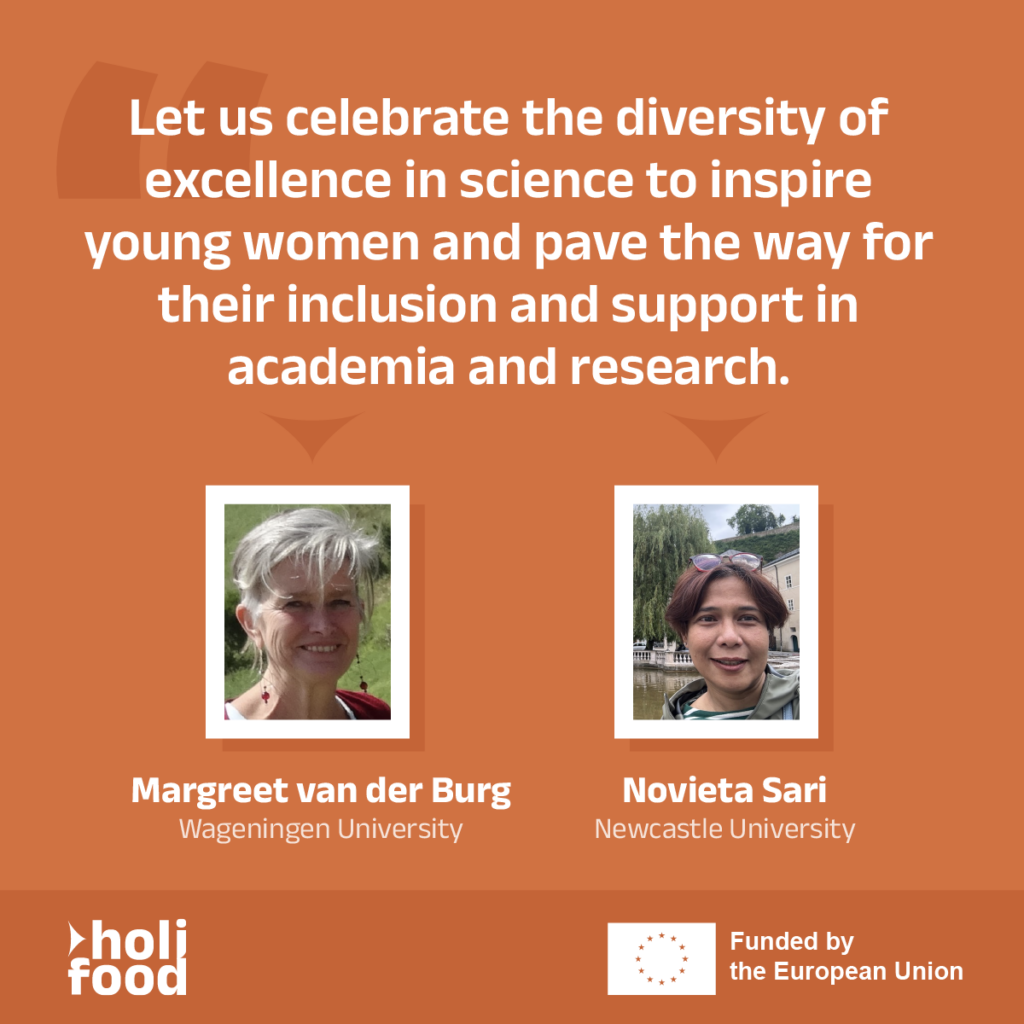
On 11 February, the UN International Day of Women and Girls in Science 2026, we reflect on how women participate in research and innovation, who advances, who drops out, and why. New data from the European Commission show that significant barriers affect career progression and equality in research careers.
According to the report “Promoting gender equality and institutional changes” published by the European Commission in January 2026, women now make up about half of experts and advisory groups, and nearly a third of project coordinators. However, women are still under-represented at senior levels. Only around 30% of top academic positions are held by women, with even lower shares in science and engineering. Leadership roles such as research directors and university presidents remain male-dominated, and patent applications by women lag far behind.
GEPs: from policy to practice
Many Horizon Europe projects, including HOLiFOOD, have built gender equality into their structures and activities. GEPs are now required for European funding and can drive change through inclusive hiring, career support and transparent practices.
Examples include:
-
- Inclusive recruitment and pay equity measures at the University of Porto.
-
- Gender balance and career development support within the Athena network of universities.
These efforts show what is possible when equality goals are linked to everyday research practices, though long-term implementation still needs commitment and monitoring.
Work–life balance and retention
Retention of women researchers, especially between ages 30 and 44, remains a key challenge. Women disproportionately shoulder care responsibilities, which affects career continuity and opportunities. Enhancing childcare support, flexible work policies and inclusive workplace cultures are essential to ensure talent is retained throughout scientific careers.
Results and Achievements
The HOLiFOOD gender headcount shows a near gender balance across the consortium, with 47.3% women and 52.7% men among 110 project members.
-
- A closer look at scientific roles reveals differences by career stage:
- PhD level: approximately 64% women
- MSc level: approximately 55% women
- Associate professor level: approximately 33% women
- Professor level: approximately 36% women
- A closer look at scientific roles reveals differences by career stage:
-
- These figures highlight a pattern seen across European research: strong female representation at early career stages, followed by a drop at senior levels.
By collecting gender-disaggregated data and analysing participation across roles, HOLiFOOD contributes concrete evidence from the food systems research field, supporting more inclusive and informed research and innovation practices
A stronger research ecosystem for all
Despite progress, persistent gaps in leadership, job security and work–life balance indicate that gender equality in research is still incomplete. Closing these gaps is not only a matter of fairness — it is crucial for the quality, innovation and competitiveness of Europe’s scientific system as a whole.
Delve into the work done on the gender dimension in HOLiFOOD and read: